Manufacturing Equipment Finance Can Help Businesses Invest in Automation
September 25, 2026 | Last Updated on: September 25, 2026

Looking for Business Financing?
Apply now for flexible business financing. Biz2Credit offers term loans, revenue-based financing, lines of credit, and commercial real estate loans to qualified businesses.
Set up a Biz2Credit account and apply for business financing.
Key Takeaways
- Manufacturing equipment finance lets businesses acquire new technologies for business, like robotics, CNC machines, and smart construction equipment, without draining working capital.
- Automation reduces manual labor, cuts errors, and increases production speed.
- Financing and leasing serve different goals.
Lenders evaluate cash flow, credit history, and business asset value before approving an equipment loan.
- Comparing financing costs against efficiency gains helps businesses decide when automation pays for itself.
Automation offers a solution to the labor shortage, but robotics, CNC machines, and smart manufacturing systems come with a high price tag. Paying upfront costs for this equipment may drain your cash reserve. That is where manufacturing equipment finance becomes useful.
Manufacturing equipment loan allows businesses to spread the cost of new machinery over time instead of paying the full amount upfront. This preserves cash for payroll, materials, and daily operations while still allowing a company to modernize its production floor. Whether a business wants to add a robotic welding arm, upgrade to computer-controlled milling machines, or install a fully automated packaging line, the right financing arrangement makes the investment achievable.
This article explains how manufacturing equipment financing works, what it can cover, and how it compares with an operating lease. This helps business owners make an informed decision about funding new or used equipment.
What Is Manufacturing Equipment Financing?
Manufacturing equipment financing is a flexible financing option a business loan used specifically to purchase machinery for production. A lender provides funds to buy the equipment, and the business repays the amount over a set term. The equipment itself usually serves as collateral, which can make approval easier than an unsecured loan.
Common Types of Manufacturing Automation Equipment
Manufacturers use a wide range of automation technologies to improve efficiency, quality, and production capacity. The right equipment depends on the facility's processes, production volume, and long-term goals.
Industrial robots: Commonly used for welding, assembly, material handling, packaging, and palletizing tasks.
CNC machines: Computer-controlled equipment that automates cutting, drilling, milling, and other precision manufacturing operations.
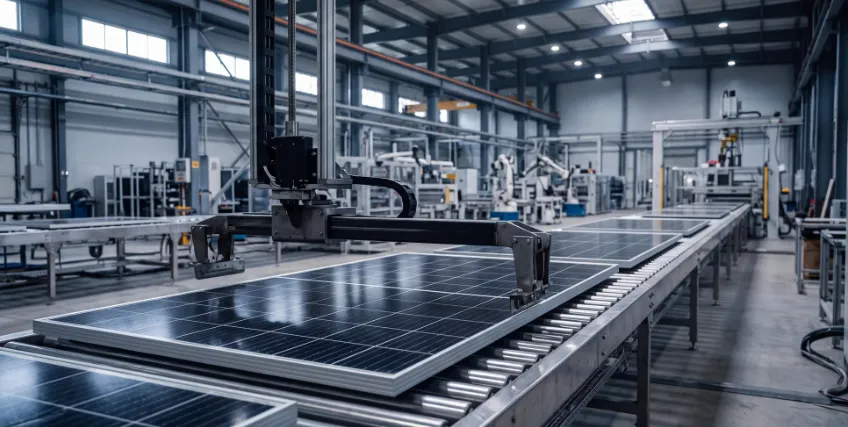
Automated conveyor systems: Move materials and products through production facilities with minimal manual intervention.
Machine vision systems: Use cameras and software to inspect products, identify defects, and support quality control processes.
Automated packaging equipment: Speeds up filling, labeling, sealing, and packaging while improving consistency.
Smart sensors and IoT devices: Collect real-time production data to monitor equipment performance, reduce downtime, and support predictive maintenance.
Many of these systems require a significant upfront investment, which is why businesses often use manufacturing equipment finance to spread costs over time while benefiting from the productivity gains automation can deliver.
How the Application Process Works
Lenders generally review the following before approving manufacturing equipment finance:
- Business revenue and cash flow over the past 12 to 24 months
- Personal and business credit scores
- The age, value, and expected useful life of the equipment being financed
- A down payment, which often ranges from 10% to 20% of the purchase price
During underwriting, lenders assess these factors to determine the risk associated with the financing request and structure appropriate terms. Many businesses also work directly with an equipment dealer, who may help facilitate financing applications and connect buyers with lending partners. Once approved, the borrower signs an equipment finance agreement outlining the loan amount, repayment schedule, interest rate, collateral requirements, and any other financing terms.
Documentation requirements are usually simple. Most lenders including banks and online lenders ask for recent financial statements, bank statements, tax returns, and a quote or invoice from the equipment vendor. Some lenders that specialize in manufacturing equipment finance can also work directly with the equipment seller, which speeds up approval and delivery.
Benefits of Automation for Manufacturers
Automation is no longer optional for manufacturers who want to stay competitive. Robotics and smart systems allow a business to:
- Increase output without adding headcount
- Reduce human error on repetitive tasks
- Operate machinery for longer hours with less downtime
- Improve workplace safety by removing workers from hazardous tasks
- Collect real-time production data to identify bottlenecks and plan maintenance
For a business weighing the upfront cost of automation, these gains often justify the investment when spread across the life of a financing agreement.
Industries That Rely on Automation Financing
Manufacturing equipment finance is not limited to large factories. Small and mid-sized manufacturers across several industries use it to stay competitive, including:
- Metal fabrication shops upgrading from manual cutting to CNC laser systems
- Food and beverage producers automating packaging and quality inspection
- Automotive parts suppliers adding robotic assembly lines to meet contract volume
- Electronics manufacturers installing pick-and-place robots for circuit board assembly
- Plastics and injection moulding companies automating material handling between machines
Businesses in seasonal industries, such as food production tied to harvest cycles, sometimes prefer financing structures with flexible or seasonal payment schedules that match their cash flow patterns. Lenders familiar with manufacturing often offer this kind of flexibility, since they understand that revenue is not always evenly distributed across the year.
Comparing Equipment Financing vs. Equipment Leasing
Once you have decided to automate manufacturing process, the next decision is how to pay for such automation equipment. Manufacturing equipment finance and leasing both provide access to machinery, but they work differently and suit different business goals.
Manufacturing equipment loans
An equipment loan is a simple path to ownership. The business borrows money, buys the machine, and repays the loan to equipment financing companies in fixed installments.
- The business owns the equipment once the loan is paid off
- Monthly payments are predictable and typically fixed for the life of the loan
- Ownership makes sense for equipment with a long useful life, such as CNC machines or heavy robotics that will remain productive for a decade or more
This path suits businesses that view manufacturing equipment finance as a long-term investment rather than a short-term operating cost. For example, a manufacturer installing a robotic welding cell or an automated conveyor system may benefit from ownership because the equipment is likely to deliver value for many years.
Manufacturing Equipment Leasing
Leasing works more like renting. The business makes regular payments to use the equipment for a set term, then returns it, renews the arrangement, or buys it at the end.
- Lower upfront costs, since a down payment is often not required
- Easier to upgrade to newer technology when the term ends
- Payments may be treated as an operating expense rather than a capital purchase, depending on lease structure
- A better fit for automation tools that evolve quickly, such as smart sensors, machine vision systems, AI-powered quality inspection equipment, or software-driven robotics that may become outdated within a few years.
This approach appeals to businesses that expect their automation needs to change as technology improves. For example, a manufacturer adopting machine vision technology for quality control may prefer leasing so it can upgrade to newer systems as inspection capabilities advance.
Evaluating Financing Costs Against Operational Gains
Before committing to manufacturing equipment finance or a lease, businesses should compare the total financing cost with the operational improvements the equipment is expected to generate. For example, an automated packaging line, robotic welding cell, or CNC machine may reduce labor expenses, increase production throughput, improve product quality, and minimize costly downtime.
If the expected savings and additional revenue exceed the monthly financing payments, the investment may produce a positive return over time. Reviewing metrics such as labor cost reductions, production capacity increases, scrap reduction, and projected payback period can help manufacturers determine whether an automation upgrade makes financial sense.
Which Option Fits Your Business?
- Choose a loan if the business plans to keep the equipment long-term and wants to build equity in the asset.
- Choose leasing if the business wants lower monthly payments and the flexibility to upgrade equipment as technology changes.
- Consider a mix of both. Many manufacturers use manufacturing equipment finance for long-life machinery like CNC equipment, while leasing shorter-lifespan technology such as automation software or sensors.
Experian data shows that businesses increasingly blend financing and leasing strategies to balance ownership goals with flexibility, particularly in industries where technology changes quickly. Financing and leasing are not mutually exclusive; many companies use both, depending on the asset.
Bottom Line
Manufacturing automation can help businesses increase production capacity, improve consistency, reduce manual errors, and stay competitive. Technologies such as robotics, CNC machinery, automated material handling systems, and smart factory tools are becoming increasingly important to improve efficiency and scale operations.
Manufacturing equipment finance can make automation more accessible by spreading costs over time, allowing businesses to adopt new technology. Before moving forward, compare financing options carefully and evaluate whether the expected productivity gains, labor savings, and operational efficiencies justify the investment. With a well-planned strategy and the right financing solution, manufacturers can upgrade their operations while achieving long-term growth and profitability.
Equipment Financing Articles

Equipment Financing Requirements: Documents that Lenders Need for Approval and Funding
What Are the Best Options for Small Business Equipment Loans with Lower Interest Rates?
Business Equipment Loan Rates and Terms: What Do They Look Like in USD?
FAQs about Manufacturing Equipment Finance
1. What is manufacturing equipment finance used for?
It is used to purchase or fund machinery such as robotics, CNC equipment, automated packaging systems, and smart sensors that support automation on a production floor.
2. Are manufacturing equipment loans hard to qualify for?
Not necessarily. Because the equipment itself typically secures the loan, lenders may approve these loans for businesses with moderate credit, provided revenue and cash flow are steady.