Renovation Financing for Small Businesses: Funding Upgrades Without Draining Cash Flow
August 13, 2026 | Last Updated on: August 13, 2026

Looking for Business Financing?
Apply now for flexible business financing. Biz2Credit offers term loans, revenue-based financing, lines of credit, and commercial real estate loans to qualified businesses.
Set up a Biz2Credit account and apply for business financing.
Key Takeaways
Business renovation financing helps bridge the gap between renovation costs and available cash reserves.
- SBA 7(a) and SBA 504 loans offer the lowest rates but may take longer to fund.
- A business line of credit works best for unpredictable renovation costs.
- Equipment financing and term loans suit businesses with a defined project scope and a fixed budget.
- Matching the right loan type to your project timeline protects working capital and prevents cash flow strain.
- Business renovation financing is available through banks, credit unions, the SBA, and online lenders, each with different speed and cost trade-offs.
Business renovation financing lets owners upgrade their property without the burden of paying huge upfront costs. This lets you repay the renovation cost over time, instead of draining cash reserves in one lump sum.
Business renovation financing is not a single product. It covers a range of loan product types, each built for a different project size, timeline, and repayment structure.
This article breaks down what business renovation financing is, when to use it, and how different loan programs fit specific renovation plans. It also covers key requirements, including the annual percentage rate (APR) and loan-to-value (LTV) ratios.
What is Business Renovation Financing?
Business renovation financing is a type of business loan used specifically to remodel, repair, or upgrade a commercial property. Some common uses include:
- Storefront and interior remodels
- Kitchen and equipment upgrades for restaurants
- Office layout changes and buildouts
- ADA compliance and accessibility improvements
- HVAC, plumbing, new roof and electrical system updates
- Flooring, lighting, and signage replacement
Lenders offering business renovation financing usually evaluate several factors before approving an application:
- The scope and total cost of the renovation project
- The business's revenue history and time in operation
- Personal and business credit scores
- Available collateral, if the loan requires it
Unlike a general-purpose home renovation loan aimed at homeowners, business renovation financing is underwritten around the business itself. Lenders look at business revenue, risk involved, and repayment plan before offering funds. The business's credit history also matters to lenders.
Lenders may also review the loan-to-value (LTV) ratio when evaluating a business renovation financing application. The LTV ratio compares the loan amount to the value of the commercial property and helps lenders assess risk. A lower LTV ratio can strengthen the application and may improve the chances of approval or help secure more favorable loan terms.
When Should You Consider Renovation Financing?
Certain situations make business renovation financing the smarter choice. Consider financing when:
- Delaying the project risks losing customers or revenue
- You want to preserve cash for payroll, inventory, or emergencies
- The upgrade is tied to a lease requirement or compliance deadline
- You expect the renovation to increase revenue enough to cover loan payments
- A sudden repair, like a broken roof or failed HVAC system, cannot wait for savings to build up
Business renovation financing also makes sense when a landlord requires tenant improvements before a lease renewal. Waiting to save the full amount in cash often means missing that deadline. A structured loan keeps the project on schedule without disrupting daily operations.
On the other hand, if the renovation is small and the business has healthy cash reserves, paying out of pocket may be a better choice. Business renovation financing makes the most sense when the project cost is large relative to monthly revenue.
What Are the Top Business Renovation Loan Options?
Business owners have several paths to funding a remodel, each suited to different project sizes, timelines, and credit profiles. The right choice depends on how much you need, how fast you need it, and how you plan to repay it.
Below is a side-by-side comparison of the five most common financing paths.
| Loan Type | Best For | Funding Speed |
|---|---|---|
| SBA 7(a) Loan | Large-scale renovations with flexible use of funds | 30 to 90 days |
| SBA 504 Loan | Real estate and major structural renovations | 30 to 90 days |
| Business Line of Credit | Ongoing renovation costs | 1 to 5 days |
| Term Loan | Defined, one-time renovation projects | 1 to 10 days |
| Equipment Financing | Renovations involving new fixtures or machinery | 1 to 7 days |
SBA 7(a) Loans
- Loan amounts up to $5 million
- Repayment terms up to 25 years for real estate-related renovations
- Requires strong credit history and a detailed business plan
- Backed by an SBA guarantee, which lowers lender risk and can improve approval chances
SBA 504 Loans
- Ideal for structural renovations, expansions, or ground-up remodels
Fixed interest rates for the life of the loan
- Cannot be used for working capital or inventory
Business Line of Credit
- Draw only what you need, when you need it during the draw period.
- Variable interest rates charged only on the amount used
- Faster approval than SBA loans
- Best suited for smaller or mid-size renovation phases
Term Loan
- Predictable monthly fixed payments.
- Funding available in as little as one to ten days.
- Rates and terms vary based on credit profile and lender type
Equipment Financing
- The purchased equipment secures the loan
- Loan terms match the useful life of the equipment
- Often faster to approve than a traditional renovation loan
The SBA 7(a) loan is the most flexible government-backed option for business renovation financing. It can cover construction, remodeling, equipment, and working capital in a single loan.
Key features:
SBA 7(a) loans remain the most widely used government-backed financing vehicle for small businesses. In fiscal year 2024, the program approved 70,242 loans totaling $31.1 billion, the highest loan count in more than 15 years.
For business owners looking for business renovation financing options, this can be the most favorable option. The loan terms are favorable, with competitive interest rates.
The SBA 504 loan is for real estate and fixed-asset renovations. It pairs a bank loan with a Certified Development Company loan, giving businesses access to larger amounts at lower, fixed rates.
Key features:
This option suits businesses planning permanent improvements to owned property. It is not the fastest path to funding, but it offers long-term rate stability that larger renovation projects benefit from.
A business line of credit gives businesses a revolving pool of funds to draw from as renovation costs come in. This makes it a strong fit for projects with uncertain or staggered expenses.
Key features:
Many businesses turn to online business financing providers for lines of credit because approval and funding happen in days. A line of credit also gives owners room to pause spending if part of the renovation gets delayed by contractors or permits.
A term loan provides a lump sum upfront, repaid in fixed installments over a set period. It works well when the renovation scope and budget are already finalized.
Key features:
A term loan is one of the simplest renovation loan options for businesses that already have contractor bids in hand and a fixed project scope.
Equipment financing funds the purchase of machinery, fixtures, or technology tied to a renovation. The equipment serves as collateral, which can make approval easier than unsecured business renovation financing.
Key features:
This option works well when a renovation centers on new kitchen equipment, HVAC systems, or specialized machinery rather than cosmetic upgrades.
Bottom Line
Choosing the right business renovation financing depends mostly on timeline, project scope, and the loan's closing costs. SBA loans offer the lowest rates for large, long-term projects. Lines of credit offer speed for urgent work. Term loans and equipment financing fit defined, one-time upgrades.
There is no single best answer. The right business renovation financing depends on your project, your credit profile, and how quickly you need the funds in hand.
Before committing to any business renovation financing option, compare at least three lenders, review the total repayment cost, and confirm the funding timeline matches your renovation schedule. The right financing choice keeps your business open, your cash flow steady, and your renovation on track from the first day of construction to the final walkthrough.
Business Renovation Loans Articles
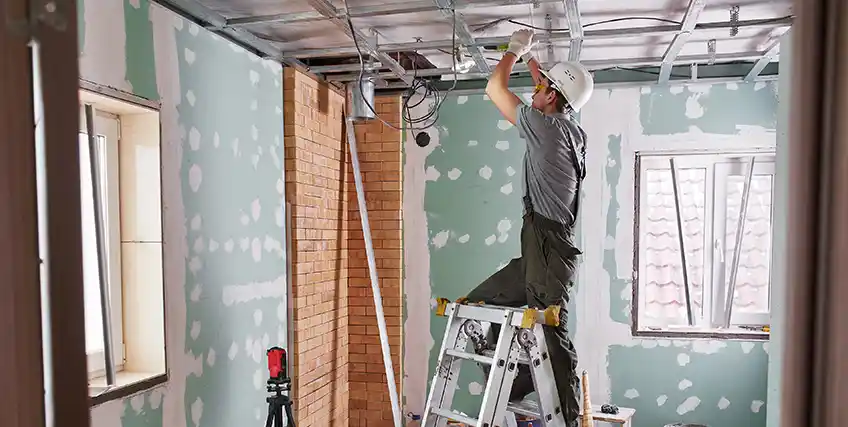
Renovation loan for business Options for Business Owners Planning Property Improvements

Is a Line of Credit Right for Your Interior Renovation Business
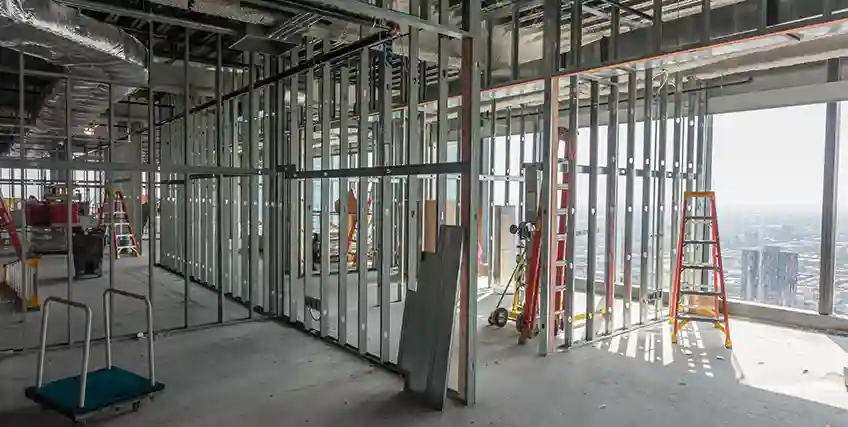
Applying for an SBA Loan as an Interior Repair Business Owner
FAQs about Renovation Financing
1. Are renovation loans a good idea?
Renovation loans are a good option for commercial project if there are major upgrade or construction required. While they combine purchase and repair costs into a single payment, they also require extensive paperwork.
2. What can business renovation financing funds be used for?
Business renovation loan funds can be used for any commercial improvement to your business space. This includes structural work, interior remodeling, HVAC systems, plumbing and electrical upgrades, flooring, lighting, signage, parking lot improvements, ADA compliance modifications, and commercial kitchen upgrades.