Commercial Vehicle Loans: How Businesses Can Finance Their Fleet Faster
August 14, 2026 | Last Updated on: August 14, 2026

Looking for Business Financing?
Apply now for flexible business financing. Biz2Credit offers term loans, revenue-based financing, lines of credit, and commercial real estate loans to qualified businesses.
Set up a Biz2Credit account and apply for business financing.
For many businesses, vehicles are essential operating assets. A contractor needs a truck. A bakery needs a delivery van. A logistics company needs a full fleet. Yet paying cash for that transportation can pull money away from payroll, inventory, or the buffer a business needs to survive a slow month.
Commercial vehicle loans may solve that problem. Vehicle financing for businesses has become a standard part of growth, not a last resort. This article covers how commercial vehicle loans work, who may qualify, the cost, and why financing often beats paying cash outright.
What Do Commercial Vehicle Loans Actually Cover?
Commercial vehicle loans are a type of business lending built specifically for companies that need to purchase vehicles for primary business use. Unlike auto loans issued to consumers, these loans go to the business entity directly, and the vehicle purchased typically serves as collateral, which is part of why rates tend to run lower than unsecured business financing.
The category is broad. A single-owner landscaping company financing one pickup truck qualifies for commercial vehicle loans. So does a regional distributor financing twelve delivery vans in one application. Both are judged primarily on the business itself, not just the vehicle.
Both new and used vehicles typically qualify, which gives owners room to control cost. A well-maintained used truck can carry a smaller loan amount than a brand-new one, and many businesses lean on that flexibility in their first few years.
How Does Commercial Vehicle Financing Work?
Vehicles are expensive, but a business often needs one to operate at all. With commercial vehicle financing, the lender covers the vehicle's cost upfront, and the business repays that amount through fixed monthly payments over a set loan term. The vehicle serves as collateral, so a default allows the lender to repossess it to recover the balance.
That security is part of what makes financing accessible even for newer businesses, since the collateral offsets some of the lender's risk. A few mechanics worth understanding before applying:
- Loan amount generally covers 80 to 100 percent of the vehicle price, depending on credit strength and lender policy.
- Loan terms commonly range from three to seven years, though bank-issued loans on heavier trucks can stretch longer.
- Fixed-rate structures are standard for commercial vehicle loans, so payments stay predictable across the term.
- Refinancing is available later if a business qualifies for better terms after building a payment history.
None of this happens overnight, but it does move faster than most owners expect once documentation is in order.
Which Vehicles Qualify Under Commercial Auto Loans?
Not every vehicle fits neatly into one bucket, so lenders group commercial auto loans by use case. Here is how that typically breaks down:
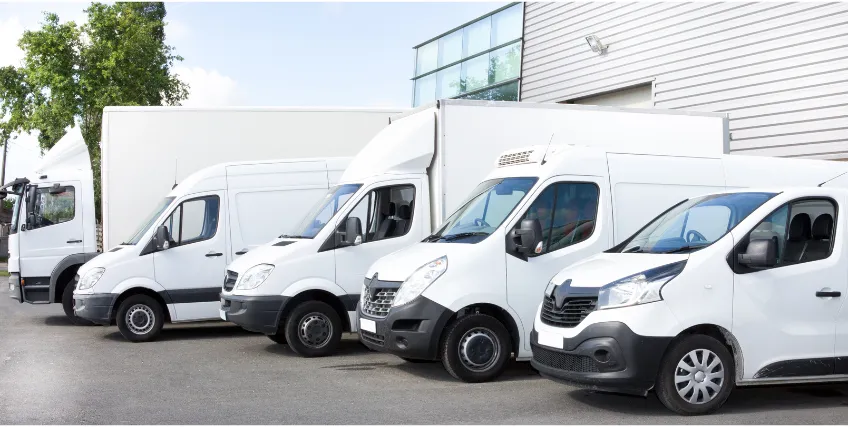
Light trucks and delivery vans: the backbone of local service and delivery businesses, and usually the easiest category to finance quickly.
Semi-trucks: finance for freight and long-haul logistics, often with longer loan terms given the higher price point.
SUVs and passenger vehicles: used for client meetings, sales teams, or executive transport.
Specialty vehicles: refrigerated trucks, utility trucks, mobile repair units, and other purpose-built equipment.
Company cars: fleet vehicles assigned to employees for business use, financed individually or as a batch.
Is it better for a business to finance one vehicle at a time, or several at once? That depends on cash flow and growth plans, and it is worth mapping out before applying.
Who Can Qualify for Commercial Vehicle Loans?
Eligibility for commercial vehicle loans may be more accessible than many owners assume, though it varies by lender. Delivery companies, construction firms, sales teams, and consulting firms commonly rely on commercial auto loans to acquire the trucks or vans their daily operations depend on.
Lenders commonly look at:
- Business credit history, along with personal credit for newer companies
- Time in business, since longer operating history tends to support better terms
- Recent tax returns and basic financial statements
- Active business licenses appropriate to the industry
- A personal guarantee, which many lenders require from newer or smaller businesses
Stronger credit and a longer track record typically translate into more competitive rates and larger loan amounts. Newer businesses are not excluded, but they may see higher rates or a request for a larger down payment to offset risk.
Documents Lenders Usually Ask For
- Two to three years of business tax returns
- Recent bank statements
- Copy of the business license
- Driver information for anyone operating the vehicle
- Vehicle quote or purchase invoice
What Determines Interest Rate and APR on Vehicle Financing?
Interest rate and APR are not the same thing and mixing them up can lead to a misleading comparison between offers. The interest rate reflects the cost of borrowing alone. The annual percentage rate folds in that rate plus lender fees, giving a fuller picture of what a loan actually costs over its life.
Rates on business auto loans move with the broader auto lending market. As of May 2026, the average interest rate on a 60-month new car loan at commercial banks stood at 7.14 percent, according to Federal Reserve data, though commercial borrowers with strong credit sometimes secure better pricing than that broader benchmark. Several factors shape where a specific business lands:
- Business and personal credit profile
- Loan amount and the age of the vehicle, new versus used
- Length of loan terms, since longer terms generally mean more total interest even with a smaller monthly payment
- Down payment size, which reduces lender risk
Prepayment penalties deserve attention too. Some commercial vehicle loans charge a fee for paying off the balance early, which can erase the savings a business expected from prepaying. Reading that clause before signing avoids an unpleasant surprise later.
How Much Down Payment Do Commercial Vehicle Loans Need?
Down payment requirements vary, but a range between 10 and 20 percent of the vehicle price is common for commercial vehicle loans, with some lenders offering zero-down options to borrowers with excellent credit.
A larger down payment shrinks the loan amount, lowers monthly payments, and reduces total interest paid across the term. It also strengthens an application for commercial vehicle loans, since it signals lower risk to the lender.
Businesses with tighter cash reserves are not locked out. Many still qualify with a smaller down payment, though the trade-off usually shows up as a slightly higher rate.
Why Choose Business Vehicle Financing Over Paying Cash?
Paying cash for a truck or van feels straightforward, but it removes capital that could otherwise fund payroll, inventory, or an unplanned repair. Business vehicle financing keeps that capital working elsewhere while the vehicle itself generates revenue.
Consider what financing preserves:
Working capital stays intact for day-to-day operations instead of sitting in one depreciating asset.
Business line of credit remains untouched, available for emergencies rather than tied up in a vehicle purchase.
- Tax deductions on interest and depreciation may apply, lowering the effective cost of the loan.
- Flexible terms let a business match payment to its cash flow cycle, spreading out slow-season months.
- Upgrading later is simpler, since refinancing or trading in a financed vehicle is more straightforward than reselling one bought outright.
Cash payment is not wrong for every business. A company sitting on significant reserves with no near-term capital needs might reasonably choose it. For most growing businesses, though, financing keeps more options open.
Commercial Vehicle Loans vs Equipment Loan: What Sets Them Apart?
Commercial vehicle loans and an equipment loan share the same basic mechanics; both use the financed asset as collateral, but underwriting differs. Vehicle loans account for titling, mileage, and road use, while equipment financing typically applies to machinery that stays on a job site.
A construction company might use equipment financing for an excavator and a commercial vehicle loan for the truck that hauls it. Each comes with its own paperwork and risk assessment.
What Should Businesses Look for in Commercial Auto Lenders?
Comparing commercial auto lenders takes more than glancing at the advertised rate. A few criteria separate a good fit from a costly mistake:
- Clear disclosure of interest rate, APR, and any origination fees
- Loan terms that match the business cash flow cycle, not a rigid default
- Transparency about prepayment penalties before signing anything
- Reasonable turnaround time between application and funding
- A track record of clear communication throughout the loan term
Rushing this step rarely pays off. Comparing two or three offers on commercial vehicle loans usually costs far less time than living with a poorly structured one for five years.
Are There Tax Benefits With Business Vehicle Loans?
Financed vehicles used for business purposes can qualify for meaningful tax treatment. Under Section 179 of the federal tax code, the IRS allows businesses to deduct a substantial portion of a qualifying vehicle's cost in the year it enters service, rather than spreading it across several years of depreciation. Financing does not disqualify a vehicle from this treatment, since the deduction applies whether the purchase was cash or a loan.
Deduction limits change yearly and depend on vehicle weight and business-use percentage, so reviewing current tax returns with a qualified tax professional before filing is the safer path.
Conclusion
Commercial vehicle loans give business owners a practical way to keep operations moving without pulling cash away from the rest of the business. Understanding loan terms, interest rate structures, eligibility criteria, and the tax treatment tied to vehicle financing puts an owner in a stronger position to negotiate rather than simply accept the first offer on the table. Whether the need is one delivery van or a growing fleet, comparing a few well-vetted options before committing tends to pay off far more than rushing the decision.
Small Business Vehicle Loan Articles
Small Business Vehicle Loans: How They Work and Who Needs Them

Small Business Car Loans: What They Are and How They Work

SBA Loans for Commercial Vehicle: Complete Guide for Small Businesses
FAQs About Commercial Vehicle Loans
1. What credit score is typically needed for commercial vehicle loans?
Requirements vary by lender, but stronger approval odds for commercial vehicle loans generally start in the good-to-excellent credit range. Businesses with lower scores can still qualify, often with a higher rate or a larger down payment required to offset the added risk.
2. Can a new business qualify for commercial vehicle financing?
Yes, though newer businesses are usually asked for a personal guarantee and closer review of personal credit, since there is limited business credit history to evaluate on its own.