Tips to Secure the Best Current Construction Loan Rates Today
April 06, 2026 | Last Updated on: April 06, 2026
April 06, 2026 | Last Updated on: April 06, 2026
Apply now for flexible business financing. Biz2Credit offers term loans, revenue-based financing, lines of credit, and commercial real estate loans to qualified businesses.
Set up a Biz2Credit account and apply for business financing.
Securing the right commercial construction loan can determine whether your project breaks ground or stalls at the blueprint stage. In 2026, developers and business owners face an evolving financial landscape, like higher borrowing costs, tighter underwriting, and a renewed emphasis on proven delivery methods like design-build. With current construction loan rates going haywire, more business owners are looking for a stable option that can help them reach their business goals without many problems. Staying updated on current construction loan rates is essential for budgeting accurately. Lenders are frequently adjusting their terms based on the volatility of current construction loan rates.
If you're planning to finance a new project in 2026, this guide breaks down everything you need to know about commercial construction loans, including qualification criteria, current construction loan rates, and trends. Most lenders will look at the average interest rate on construction loan products to determine your specific offer.
This article will offer actionable insights and direct information on how to improve your Debt Service Coverage Ratio (DSCR) to secure investment property loans and enhance your real estate investment portfolio.
A construction loan is a type of short-term financing, created for the specific purpose of financing a new home or other real estate project. Knowing the current new construction interest rates helps you decide between building now or waiting. A traditional mortgage, also called a permanent loan, will help you buy an existing house. However, if you need to build a new house from the ground up, especially if you also need to purchase the raw land, that's where a construction loan can help.
The loan can be applied for by anyone who is investing their time and money in construction or related expenses. An individual homeowner, a contractor, or a small business owner can use construction loans to finance their construction project. If you already own the land, the equity that you have in that property can be used as your down payment for your construction loan. Many borrowers ask how a construction loan turns into a mortgage.
After the house is complete and the term of the loan ends (usually only one year), the borrower can refinance the construction loan into a permanent mortgage. Alternatively, the borrower can apply for a new loan (often called an “end loan”) to pay off the construction loan. Since current construction loan rates vary, refinancing at the right time is critical. It is often beneficial to consult a financial advisor regarding how current construction loan rates might affect your long-term debt.
Does the borrower make monthly payments on a construction loan? Yes, however interest payments on this loan might only be required while the construction project is still underway. Unlike a lump sum loan, construction loans are similar to a line of credit, so interest is based only on the actual amount you borrow to complete each portion of a project rather than all at once. Some construction loans may require the balance to be paid off entirely by the time the project is complete. Because of this structure, current construction loan rates significantly impact your monthly cash flow during the build.
More than just for the actual building, a construction loan can also be used to pay for equipment used in construction, building materials, or for hiring employees.
Maintaining a good credit score is crucial for qualifying for a DSCR loan. Lenders use your credit score to gauge your financial responsibility and the likelihood of defaulting on your loan. To improve your credit score, make timely payments on your outstanding debts, keep your credit utilization low, and regularly monitor your credit report for inaccuracies. High scores often lead to more favorable current construction loan rates.
Lenders look at your tax returns to verify your income and determine your ability to manage your debt to income ratio. Ensure that you have accurate and updated tax returns when applying for a DSCR loan. Apart from speeding up the application process, this will help prove your financial soundness. Consistent revenue on tax returns makes it easier to lock in competitive current construction loan rates.
The loan amount requested affects DSCR directly. As such, requesting a higher loan amount will lower the Debt Service Coverage Ratio (DSCR), thus affecting the ability to qualify for a loan. Be sure to weigh your financial condition and investment aims before settling on a loan amount.
Increasing rental property income can boost positive cash flow and enhance DSCR. This can be achieved through property maintenance, property upgrades, and tenant screening to ensure tenants paying rent timely and in full are attracted to the rental property. Stronger income profiles help you secure current construction loan rates that are more competitive.
Lowering your debt obligations can improve your debt-to-income ratio and increase your DSCR. You can achieve this by paying off outstanding debts, avoiding new debt, and refinancing existing loans to secure lower interest rates.
Negotiating favorable mortgage terms and securing a lower interest rate can significantly impact your DSCR. Research multiple lenders to find the best rates and terms available for your situation. If you already have a mortgage, consider refinancing to benefit from a higher interest rate environment. Understanding the average interest rate on construction loan options helps in these negotiations.
Monitoring DSCR interest rates helps investors maintain favorable borrowing terms and supports sound financial decisions. It ensures properties remain profitable by aligning income with debt obligations.
Tracking DSCR interest rates directly impacts loan affordability. Lower rates reduce monthly debt service payments, easing the financial burden on investors. When rates rise, staying aware allows borrowers to manage their strategies, such as renegotiating terms or refinancing to maintain manageable costs. By aligning loan payments with property income, investors minimize the risk of default and maintain positive cash flow. Keeping a pulse on current construction loan rates is the first step in this process.
Monitoring DSCR interest rates enhances financial planning and stability. Investors adjust budgets more effectively by predicting loan costs tied to fluctuating interest rates. Accurate rate tracking also aids in forecasting potential returns and setting investment priorities. Properties with manageable DSCR-related costs remain resilient in changing market conditions, safeguarding long-term financial health. Your pro forma should always account for potential hikes in current construction loan rates to ensure stability.
DSCR interest rates pose unique challenges, affecting both property profitability and loan terms. These challenges impact financial planning and the overall investment strategy.
Frequent changes in market interest rates directly affect DSCR loan rates. Rising base rates such as Secured Overnight Financing Rate (SOFR) or London Interbank Offered Rate (LIBOR) increase the cost of borrowing, causing higher monthly debt service payments. Economic factors like inflation or fluctuating lender spreads also create uncertainty, complicating budget forecasts. Inconsistent market trends may lead to unpredictable interest rate adjustments, which could disrupt long-term financial planning. Many developers track current new construction interest rates daily to avoid surprises.
Maintaining a favorable DSCR becomes challenging when loan rates rise faster than property income growth. Increasing operational expenses, such as property maintenance and taxes, erode net income, lowering the DSCR. Borrowers with adjustable-rate loans face additional risks, as rate hikes raise debt obligations unpredictably. Without effective expense management or improved rental income, sustaining a high DSCR remains difficult, leading to unfavorable loan terms or restricted refinancing options. In a volatile market, current construction loan rates can shift a project from profitable to break-even quickly.
Securing favorable DSCR interest rates involves strategic financial planning and effective communication with lenders. By focusing on key factors, borrowers can enhance their chances of obtaining better loan terms.
Enhancing DSCR increases the likelihood of securing lower interest rates. Borrowers can achieve this by boosting property income while reducing operating expenses. For instance, implementing competitive rental pricing strategies or minimizing utility costs can improve net operating income (NOI). Paying existing debts also enhances the DSCR by reducing debt obligations, making the investment less risky for lenders.
Maintaining a strong credit score positively impacts interest rates. Regularly reviewing credit reports, addressing discrepancies, and reducing credit utilization rates help strengthen credit profiles. A higher credit score signals reliability, lowering the perceived lending risk and influencing favorable rate adjustments. This reliability is key when trying to lock in the best current construction loan rates.
Communication that is effective with lenders leads to opportunities for having a reduced rate of interest. If borrowers present exhaustive documentation, like current financial statements, property performance information, and loan application documentation, they increase their credibility. Evidence for rental demand or tenant occupancy also provides assurances of consistency to lenders.
Rate shopping through multiple lenders helps to ascertain competitive terms. Loan prequalification or obtaining quotes can highlight differences in interest rates, allowing for informed decision-making. Borrowers with the best relationships or loan history in the loaning network will use this to negotiate a DSCR interest rate.
With proper planning and the right lender, you may be able to get the best current construction loan rates. Preparing the necessary documentation, understanding different financing options, and addressing potential pitfalls early on may help you get approved faster.
Ultimately, finding a reliable financing partner will allow your business to move forward confidently with its construction projects. So if you're ready to take that next step, simply keep an eye on the current construction loan rates and start shopping around for lenders to get started.

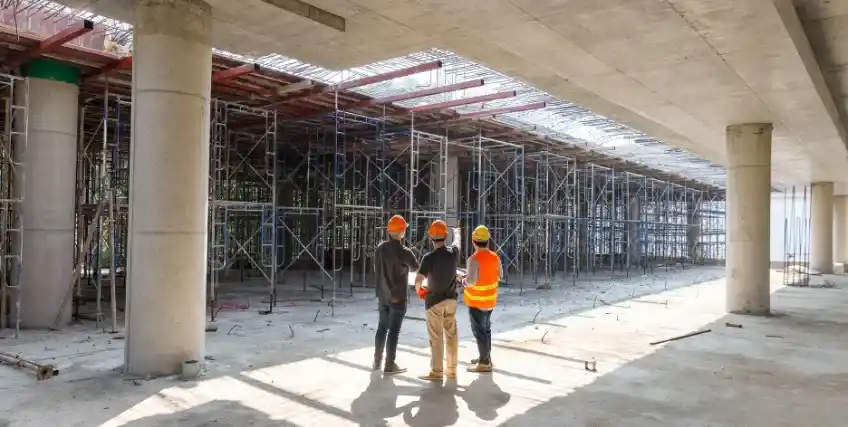

There are construction loans for builders in which the contractor can secure financing directly from the lender. Some types of construction loans are available directly to homeowners. In this case, the homeowner receives the funds and is then responsible for paying the contractor for the construction of the property.
Some borrowers may qualify for zero percent down on certain types of construction loans, but down payments on new construction loans are typically high.
Construction business owners should aim for a credit score of 600 or higher, and a low debt-to-income (DTI) ratio. Borrowers with bad credit are more likely to have high interest rates. You are also likely to need a down payment of the loan value to qualify.
Construction loans can help you with building your dream home or getting a commercial space off the ground. However, they come with steep interest rates and shorter repayment terms. One of the advantages is that you typically make interest-only payments during the building process. Finding a lender with low current construction loan rates can mitigate many of these drawbacks.
Term Loans are made by Itria Ventures LLC or Cross River Bank, Member FDIC. This is not a deposit product. California residents: Itria Ventures LLC is licensed by the Department of Financial Protection and Innovation. Loans are made or arranged pursuant to California Financing Law License # 60DBO-35839