How Businesses Can Use Renewable Energy Finance to Increase Asset Value
July 28, 2026 | Last Updated on: July 28, 2026

Looking for Business Financing?
Apply now for flexible business financing. Biz2Credit offers term loans, revenue-based financing, lines of credit, and commercial real estate loans to qualified businesses.
Set up a Biz2Credit account and apply for business financing.
Article Summary:
Green energy projects can help businesses lower utility costs and reduce environmental impact.
Renewable energy finance options can help businesses pay for costs without tying up substantial amounts of cash.
These upgrades can also add to the value of your commercial property.
Most business owners know that renewable energy upgrades can lower utility costs, reduce emissions, and positively impact the environment.
What fewer realize is that green energy projects can increase the value to your commercial assets. Whether you want to fund a solar panel installation or get high-efficiency HVAC upgrades, these moves can be an investment in more ways than you realize.
In this article, we’ll cover what qualifies as green and sustainable construction and how renewable energy finance options can help.
What Qualifies as Green and Sustainable Construction for Businesses
Adding clean energy to your commercial properties isn’t just a trend. In fact, in 2024, $8 billion was invested across various supply chain segments, including the hydrogen electrolyzer, wind, solar, and battery sectors, according to the Business Council for Sustainable Energy.
It’s not only about combating climate change and reducing the environmental impact of emissions, but also about long-term efficiency and reducing costs, which add value to your commercial properties. If you’re looking into renewable energy finance options, you want to know what qualifies as green and sustainable construction for businesses.
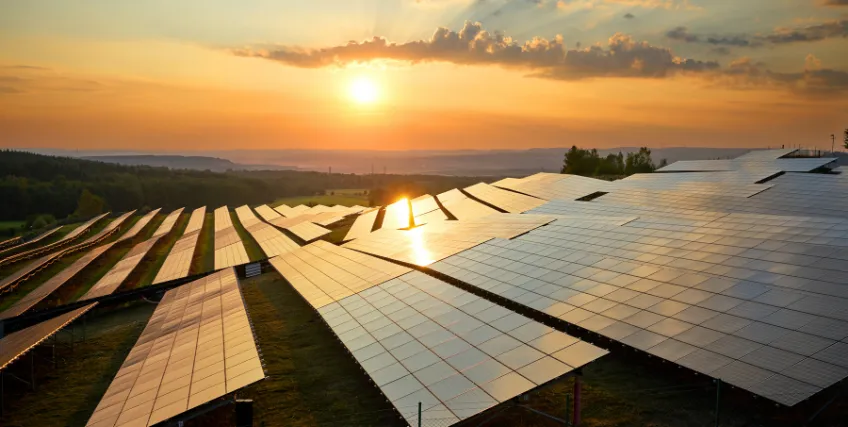
Solar panel installations and energy storage systems: These systems help turn the power of sunlight into electricity, while storing it for later use. This may reduce your reliance on electricity and could be a cost-saving measure.
Sustainable materials: Whether you’re constructing a new building or renovating an existing one, using sustainable materials can help boost long-term performance.
High-efficiency upgrades: The Department of Energy notes that homes and commercial buildings consume 40% of the energy in the U.S. Inefficient or outdated systems can be a budget leak and waste a significant portion of that energy. Investing in LED technology and upgrading to efficient heating and cooling systems can help.
Why Renewable Energy Finance May Make More Sense Than Paying Cash
Business owners looking to invest in renewable energy might feel like the costs are out of reach. Waiting until you’re able to pay cash can mean missing out on potential savings and adding value to your properties.
If you do have the capital to cover expenses, it could have a significant impact on your cash flow. While paying in cash could be more straightforward, taking advantage of renewable energy finance options can make more sense for the short and long-term benefits.
Safeguards working capital
Invest in large or multiple projects
Savings support payments
Provides flexibility
Increases asset value
Using renewable energy finance options allows business owners to make energy-efficient investments without tying up cash you might need to cover day-to-day expenses.
Businesses using cash may be limited in scope as to what they can do. With renewable energy finance options, it’s possible to invest in larger projects or even multiple projects. Instead of only updating solar systems, you could update lighting, heating, and cooling. Due to that, sustainability goals and operational upgrades can be met faster.
Investing in renewable energy could lower your energy costs. Those savings can support the cost of the payments with renewable energy finance options.
During these times, the economy feels anything but certain. Tying up a substantial amount of cash could limit your adaptability if and when the market changes. Taking advantage of renewable energy finance options spreads out total costs, giving you more flexibility now.
Using alternative energy resources can boost the commercial value of your property and appeal to potential buyers, stakeholders, and investors.
These benefits make low-carbon green energy upgrades a strategic investment for business owners.
3 Ways Renewable Energy Acts as a Business Asset
Renewable energy is a good move for the environment and helps you lower utility costs. On top of that, it can be a verifiable asset that strengthens both your balance sheet and long-term value.
Performance data: If you invest in solar installations or other energy-efficient upgrades, you’ll have measurable performance data at your disposal. You’ll be able to track the overall cost savings and include that in your financial records.
Boosts balance sheet: One of the benefits of financing renewable energy projects is that they’re considered capital assets. As a result, it can improve your business’s financial profile.
Reduces energy costs: Though it can be a big investment, you’ll see tangible savings with renewable energy by lowering your utility costs. That translates into a higher net operating income and can enhance cash flow, which impacts your profitability and how your business is valued.
Green Energy Funding Options for Business Owners
Business owners can look into sustainable infrastructure models to add value to their commercial property and reduce the impact on the environment. However, getting your renewable energy project financed can be a challenge. The sticker price can be out of reach for many companies that need to protect their cash flow.
For example, commercial solar panel installations can cost between $50,000 to $600,000 on average, according to Coldwell Energy.
That’s where green funding options come in. There are various renewable energy finance solutions available to help make projects more accessible.
Term Loans for Renewable Projects
Equipment and Construction Financing
Property Assessed Clean Energy Program (PACE)
Renewable Energy Startup Grants
Term loans can be an appealing choice for renewable projects like solar installations or other energy-efficient systems. Borrowers get the capital they need in the form of a lump sum to cover costs. The loan repayment is stretched out over a fixed period, and interest rates are also typically fixed.
As a result, monthly payments stay the same. For budget-conscious teams, this makes it easier to plan and understand how your payments will affect your cash flow. Term loans can be an appealing choice for renewable projects like solar installations or other energy-efficient systems.
Borrowers get the capital they need in the form of a lump sum to cover costs. The loan repayment is stretched out over a fixed period, and interest rates are also typically fixed. As a result, monthly payments stay the same. For budget-conscious teams, this makes it easier to plan and understand how your payments will affect your cash flow.
Financial institutions like banks and credit unions may offer term loans, in addition to online lenders. Rates, repayment terms, and funding speed vary widely depending on the lender.
Specialized renewable energy finance options are available to help with purchasing equipment or getting the capital you need for construction. Banks may have commercial lending arms that help fund utility-scale solar projects, wind, and integrated battery energy storage systems (BESS).
The Property Assessed Clean Energy Program, or PACE, “is a financing tool that allows property owners to finance the upfront cost for qualified energy, water, resilience, and public benefit projects with funding through a voluntary assessment on the property tax bill,” according to the Environmental Protection Agency (EPA).
The Commercial PACE or C-PACE program can help with renewable energy finance options on commercial properties. It’s key to note that programs can vary by the state and local government.
Not all renewable energy finance options are loans. Some companies may be eligible for renewable energy startup grants. These can help supplement any other funding options and reduce the cost of implementing sustainability initiatives.
How to Evaluate Renewable Energy Finance Options
When you want to invest in green energy, choosing the right renewable energy finance solution is key. Business owners can evaluate options and consider the following factors:
Know the scope: Before getting your project financed, make sure you understand the scope. Identify which upgrades you’re considering, like solar panels, energy storage projects, sustainable building materials, and more. Get an estimate for total costs, including everything from the equipment to installation and maintenance.
Compare financing structures: Research different renewable energy finance options, including term loans, construction loans, and equipment financing. Review repayment terms, interest rates, and potential energy savings.
Research lender: Do your homework and research lenders that specialize in green energy projects. Understand the lender’s potential energy savings projections and how these tie in your needs and goals.
Review long-term impact: Consider how your green energy project will impact operating costs, cash flow, and asset value.
Carefully considering and comparing your renewable energy finance options can help you get the most out of the project. You want to improve energy efficiency, reduce costs, and add value to your property, which is considered a business asset.
Final Thoughts
The right renewable energy finance option can add value to your commercial property, while preserving cash flow. It can help you upgrade without delay, without the need to pay right away, freeing up cash flow and enhancing your business profile in the eyes of potential buyers and investors.
Green Energy Financing Articles
How Commercial Solar Financing Companies Help Businesses Beat Rising Utility Costs

Sustainable Logistics: Using a Green Energy Grant to Finance Fleet EV Upgrades

How Green Finance Can Help Your Business Qualify for Better Loan Opportunities
FAQs about Renewable Energy Finance
If you want more information, here are some answers to frequently asked questions about renewable energy finance.
1. What is Renewable Energy Finance for Small Businesses?
Renewable energy finance includes various funding options available to small business owners to cover solar projects, sustainable energy infrastructure upgrades, and more. Instead of paying for sustainability projects upfront, total costs get spread out to make clean energy investments more accessible.
2. What Types of Projects Qualify for Green Energy Funding?
Green energy funding can support a variety of renewable energy projects, including energy storage systems, solar panel installations, wind farms, as well as other construction projects designed to reduce emissions. Eligibility requirements vary by lender, so what projects qualify may differ.
3. Can Renewable Energy Upgrades Increase the Value of Commercial Property?
Yes, renewable energy upgrades may increase the value of commercial property by improving long-term energy efficiency. As a result, it can make the property more attractive to potential buyers and lenders.
4. How Do Renewable Energy Financing Companies Support Business Owners?
Renewable energy financing companies support business owners by providing loans and other funding solutions for project development in the clean energy sector. This includes solar energy and other renewable power projects. These financing options make it easier to invest in sustainability as it spreads out repayment over time.
5. Are Renewable Energy Startup Grants Available for New Businesses?
Some early-stage businesses may qualify for renewable energy startup grants. Eligibility depends on the grant provider. These grants can help cover the energy transition to solar or wind, making renewable energy projects more accessible for new businesses.