Business Interest Rates,
Simplified for Small Business Owners
Looking for Business Financing?
Apply now for flexible business financing. Biz2Credit offers term loans, revenue-based financing, lines of credit, and commercial real estate loans to qualified businesses.
Set up a Biz2Credit account and apply for business financing.
Every dollar a business borrows costs money. That price is reflected in the business interest rates a lender charges, and for small business owners across the U.S., those rates determine how much a loan actually costs from start to finish. Business interest rates depend on the type of loan, lender, credit profile and the economy in general. Here's how they work, what drives them and what the numbers look like for some common financing options.
What Business Interest Rates Actually Mean for a Small Business Owner
Business interest rate is the cost you pay for using the lender's money, expressed as a percentage of the loan amount. It is an important factor in any company's financial planning, serving as both an opportunity and a challenge. This is why it is so important that you small business owners understand exactly how it works.
This interest rate is crucial for businesses because it affects the total cost of the loan. A lower interest rate can mean lower monthly costs, which facilitates the company's cash flow and investment capacity. On the other hand, a higher interest rate can increase long-term costs and burden the company's finances.
When considering different interest rates on different business loans, it's important to look at several factors. These include the type of interest rate -- is it fixed or variable? How often is the interest calculated? In addition, it is important to consider how external economic factors can affect the interest rate. A well-informed interest rate decision can make a big difference to the financial well-being and success of your business.
Most lenders quote the total cost as the annual percentage rate (APR). The APR, which is different from the quoted interest rate, factors in origination fees, closing costs and other loan costs, to give borrowers the complete picture of what financing will cost them. Federal lending laws require lenders to disclose APR, making it the most reliable metric to compare offers from different financial institutions.
It is also worth noting that the APR on a loan to a business does not work the same way for all loan types. Term loans use simple interest-based APR. Merchant cash advances utilize factor rates and generally does not use interest rates. Invoicing financing charges a percentage of the invoice value. These few simple structures result in different calculations and ways of expressing the cost of borrowing.
What Drives Business Interest Rates and Business Lending Rates
The Federal Reserve and the Prime Rate
The Federal Reserve sets the federal funds rate. This is the rate at which banks lend to each other on a one day basis. Lenders set their rates in relation to the prime rate, which follows the federal funds rate . “When the Fed cuts rates, business lending rates tend to follow suit throughout the market.” Fed raises rates, cost of borrowing goes up.
Credit Score and Creditworthiness
Lenders assess risk before pricing a loan. A borrower with a strong personal credit score, clean credit report, and solid business credit scores presents lower risk and typically receives lower rates. Both personal and business credit matter, newer businesses with limited credit history often see higher rates simply because there is less data available for lenders to evaluate.
Cash Flow and Business Financials
The lenders will evaluate the risk profile of a business to identify the internal and operational vulnerabilities. For risk factors such as inconsistent cash flow or limited collateral, a higher interest rate is likely to be applied to help mitigate that risk. They also assess creditworthiness the same way. This includes the business’s credit history and the owner’s credit history. A good credit history shows that you are responsible in paying back debt, which can lead to lower rates. Having a bad credit history is a risk for lenders and it can make borrowing more costly.
Loan Structure: Secured vs. Unsecured
Secured loans are those loans that are secured by assets of the business, such as equipment or commercial real estate and they tend to have lower rates than unsecured options. Lenders reduce their risk with collateral and pass part of that risk reduction back to the borrower as a lower rate.
Online Lenders vs. Traditional Banks
Shorter loan terms (how long you'll be paying off the loan) often come with lower business interest rates, since the bank is exposed to less risk over a shorter timeframe. Remember, even if you get a lower rate of interest, your monthly payments will be a lot higher as you have less time to pay the loan off, and that will affect your cash flow.
Business loan interest rates come in two structures: fixed vs. variable. Fixed rates remain the same for the duration of the loan providing you with predictability for your business and payments. Variable rates will fluctuate with the market conditions.
Amortization is the process of paying of a loan over time. The most common amortization schedule is monthly payments. In general, the more frequently payments are made, the lower the interest rate; the less frequently payments are made, the higher the interest rate.
What are the Types of Business Interest Rates Available?
Not all business interest rates are calculated the same. The structure of the rate, how it is applied, or how it changes over time, affects total repayment as much as the rate itself.
Take a closer look at factor rates. It looks small as a multiplier. If you annualize it, it’s may be lot more expensive than a traditional term loan.
Variable-rate loans have a different kind of risk. When the Federal Reserve changes the federal funds rate, lenders that price off the prime rate adjust their rates, too. With a large loan balance, a rate movement can move monthly payments by hundreds of dollars.
Average Business Interest Rates for Different Financing Products
Business interest rates differ greatly depending on the financing product. The difference between products is big. If a merchant cash advance, which falls under revenue-based financing, is offered by an online lender, the effective APR could be higher. This is what you have to pay for speed. The biggest lever when a small business owner is looking for financing is the product selection decision.
Business Interest Rates and the Real Cost of Borrowing
The stated business interest rates on a loan agreement do not capture everything a borrower pays. Several additional costs affect what financing ultimately runs over its full term.
Origination Fees
A one-time charge at the start of the loan. It is either deducted from the loan proceeds upfront or added to the outstanding balance.
Prepayment Penalties
Some lenders charge a fee if the borrower pays off the loan ahead of schedule. On fixed-rate loan products, early payoff can still cost more than expected if a penalty clause applies.
SBA Guarantee Fees
For SBA 7(a) loans, guarantee fees are charged based on loan size.
Closing and Packaging Costs
Depending on the lender and loan type, additional processing fees may be collected at closing or rolled into the loan balance.
NMLS ID Disclosure
Licensed lenders are required to display their NMLS registration number. Borrowers can look up any lender's NMLS ID to confirm credentials before signing any agreement.
The most straightforward way to compare the true cost of multiple loan offers before making a decision is to run the full repayment schedule through a loan calculator, including all fees. The figure to compare between lenders is the APR and not headline rate.
Business Interest Rates for Startups vs. Established Businesses
Business interest rates are not applied uniformly. Where a business is in its growth journey directly affects the business lending rates it can qualify for.
Startups face higher interest rates as a baseline. The core reason is data or the absence of it. Without a track record of revenue, repayment history, and consistent cash flow, lenders have little to assess when pricing risk. Most traditional banks set a minimum of two years in business as a threshold for standard term loan eligibility. Businesses that fall short of that threshold are pushed toward online lenders or government-backed programs, both of which may carry higher rates.
SBA loan programs fill part of that gap. Because the U.S. Small Business Administration guarantees a portion of each SBA loan, lenders take on less risk, which allows for lower rates than an equivalent unsecured product.
Established businesses with documented cash flow, strong business credit scores, and collateral to offer have more options. They are better positioned to access lower business interest rates through traditional banks, and they carry more negotiating leverage when seeking a loan for a business on favorable terms.
Trusted by Thousands of Small Business Owners in America.**
Simply because we get what you go through to build a business you believe in.
**Disclaimer: All stories are real, as told by real business owners. Customers do not receive monetary compensation for telling their stories.
From One Entrepreneur to Another: We Get You
We understand what's behind building a business you believe in.
All stories are real, as told by real business owners. Customers do not receive monetary compensation for telling their stories.


Business Interest Rates Articles

Ways to Lower Your Small Business Lending Interest Rate Before Applying
Businesses often question “why is my lending interest rate so high?” The answer is that lenders price...

How Low Interest Short-Term Loans Help Small Businesses Handle Cash Flow Gaps
At some point, every business faces a cash flow issue. It can be due to late merchant...

Tracking Trends: How Much Are the Interest Rates Today vs. Last Year?
Business financing plays a very important role in the growth journey of any business.

Comprehensive Guide to Find Business Loans with Interest Rates
Thinking high-interest debt is a silent killer for your small business’ cash flow? You...

Does Your Business Credit Score Actually Get You the Lowest Interest Rate?
Business financing decisions often start with one assumption: a strong credit score...

Ways to Secure the Best Possible Loan Rates for Your Business
As a small business owner, you may be aware that having a credit score alone is not...
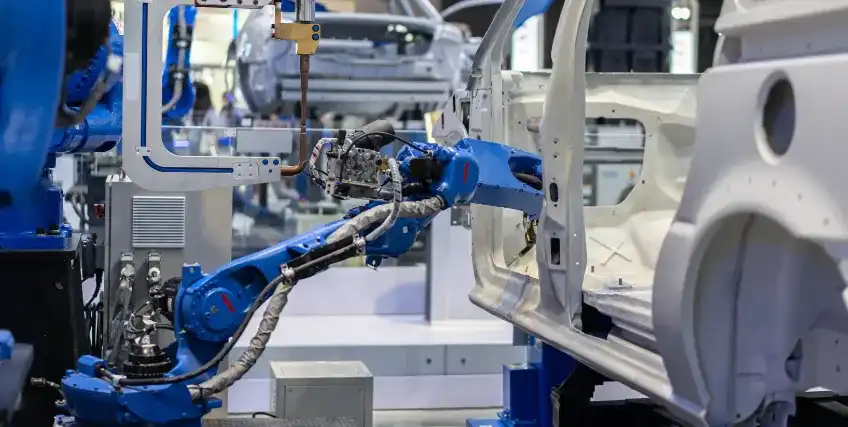
Why US Manufacturer May Need Low-Rate Loans for Equipment Upgrades
Running a manufacturing facility is expensive for the more than 235,000 small business owners in the industry.
FAQs About Business Interest Rates
1. What is a typical interest rate on a business loan?
It depends on the loan type and lender. Business interest rates shift with market conditions and the creditworthiness of the borrower.
2. How do business lending rates differ from personal loan rates?
Business lending rates factor in the business's full financial profile, including business credit scores, annual revenue, and cash flow, not just the borrower's personal credit score. Business loans are generally assessed as higher risk than secured personal loans, which can translate to higher rates. SBA-backed programs and strong business financials can narrow that gap.
3. Can startups get reasonable business interest rates?
Startups face higher business interest rates because of limited operating history. SBA Microloan and 7(a) programs extend access to businesses that do not qualify for standard bank financing. Building business credit scores, keeping the personal credit score clean, and documenting any revenue from the start all improve a startup's position with lenders over time.
4. What is the difference between APR and the interest rate on a business loan?
The interest rate is the base cost of borrowing expressed as a percentage. The annual percentage rate (APR) includes that rate plus fees, such as origination costs, packaging fees, and other loan costs, expressed as a single annualized number. APR is the more complete figure for comparing loan options because it captures the full cost of the financing, not just the interest portion.
5. How do small business owners qualify for lower business interest rates?
Lenders evaluate credit report history, business credit scores, personal credit score, revenue consistency, cash flow, collateral, and time in business. Businesses that offer business assets as collateral, maintain clean credit, and show steady revenue are in a stronger position to access lower business interest rates. Comparing offers from traditional banks, SBA-approved financial institutions, and online lenders, and reviewing the full APR on each, is one of the most reliable ways to identify competitive business lending rates.
Term Loans are made by Itria Ventures LLC or Cross River Bank, Member FDIC. This is not a deposit product. California residents: Itria Ventures LLC is licensed by the Department of Financial Protection and Innovation. Loans are made or arranged pursuant to California Financing Law License # 60DBO-35839
