Food Industry Financing:
Complete Guide for Startups & Established Businesses
Looking for Business Financing?
Apply now for flexible business financing. Biz2Credit offers term loans, revenue-based financing, lines of credit, and commercial real estate loans to qualified businesses.
Set up a Biz2Credit account and apply for business financing.
Owning a restaurant can be rewarding but it may often come with financial challenges. Restaurants are prone to irregular revenue while they need to move ahead with their daily operations to make cover payroll, maintain equipment and more. So, to kickstart a new restaurant or expand an existing one, food industry financing comes into play. A food business loan or a food trailer financing option may be used to grow and maintain day-to-day operations, without straining personal cash reserves.
The food industry is a core pillar of the U.S. economy, which is responsible for feeding millions daily. However, tasting success in this competitive market, requires more than just a passion for food. Wise financial management is key for businesses to expand, innovate, and maintain stability. This page explains food industry financing, how to use a food business loan, tips to improve approval chances, eligibility criteria, mistakes to avoid and FAQs.
What is Food Industry Financing?
Food industry financing is a funding solution used by business owners. It provides capital that an entrepreneur can use to support short- and long-term business operations. There are different ways that a food industry financing can be structured, depending on the lender's terms, applicant's eligibility and the requested loan amount.
Why is Food Industry Financing in Demand?
According to data from the National Restaurant Association, eating and drinking establishments represent approximately 72% of the food industry. The total registered restaurant industry sales in April 2025, amounted to $99.1 billion, an increase of 3.8% from April 2024, according to NRA. This colossal industry includes everything from quick-service chains to fine dining establishments, each playing a significant role in shaping the nation's economy. According to Toast, the U.S. state with the most number of restaurants is California, home to 12.02% of all restaurants in the country. Texas and Florida follow closely, with the second and third most restaurants, respectively.
How Does Food Industry Financing Work?
Food industry financing blends different ways to support borrowers. It includes debt financing (bank loans and lines of credit) for predictable costs, equity financing for growth (selling ownership stakes), and gov-backed loans for specific projects. The most-suited food industry financing option depends on the business's stage, cash flow, and needs.
Financing Options for Food Industry
There are a variety of financing options for the food industry. Borrowers can choose the one that works best for them, as per business needs, repayment capacity and lender type. Listed below are the food industry financing options that interested applicants can consider:
Term Loan
With a small business term loan, the borrower receives funding upfront and pays it back in installments with added interest over a period of time. Lenders may consider business alongside personal financial history and credit scores for qualification, amid other factors.
Small Business Administration (SBA) Loan
This is a flexible financing solution, as a portion of the loan is guaranteed by the U.S. Small Business Administration. Lenders may typically provide these loans to borrowers, with more favorable terms and interest rates than traditional loans. Qualified restaurant owners can make the most of it, given the extensive accessibility, lower down payments, and longer repayment terms. However, SBA loans may be difficult to qualify for, as they have stricter eligibility criteria and a rigorous application process. The two popular options under this funding solution are:
- 7(a) Loan Commonly used for a variety of business needs, including startup costs, equipment, and working capital.
- 504 Loan A long-term, fixed-rate financing option for major fixed assets, such as real estate and equipment.
Business Line of Credit
This financing solution allows access to a pre-determined amount of funds whenever needed. The borrower only pays interest on the amount drawn from the total. The funds become available to borrow again, as previous payments are repaid.
Business Credit Card
This works like a personal credit card, enabling business owners to make purchases, up to a certain limit. Carrying the statement balance beyond the payment due date, may incur interest.
Equipment Financing
This financing method allows small business owners to purchase the equipment they need to keep their businesses moving, without tapping into personal savings. This approach typically involves a lender purchasing the equipment and the business owner making regular payments for its usage. Restaurants may be able to get a tax deduction when they use equipment financing. The specifics of these deductions often relate to depreciation (such as Section 179 deductions or bonus depreciation) or deducting interest expenses, depending on how the financing is structured (e.g., a lease versus a loan). However, consult with a tax professional for better insights.
Invoice Factoring
If the restaurant provides catering or other services that involve invoicing customers, this financing solution may be considered. This includes receiving capital by selling invoices to a third party. In return, the business would receive an advance based on a percentage of the total value of the invoices. Third party factoring companies may then take on the responsibility of collecting payments from customers owing the outstanding balances.
Franchise-specific Financing
This refers to the ways to fund a franchise, including franchise loans, which can be offered directly by the franchisor or through preferred lenders.
Merchant Cash Advance (MCA)
This is a way for businesses to get a lump sum of cash in exchange for a percentage of their future credit card sales. It is important to note that technically a MCA is not a loan. Unlike a traditional loan, repayment is not a fixed amount. Instead, a pre-determined share of daily sales is deducted until the advance plus a fee is repaid. This makes it an accessible option for businesses that may not qualify for traditional loans, although it may bring along high interest rates.
Crowdfunding
Startups with a unique concept or a special story to tell, can resort to crowdfunding via online platforms. This usually includes contributions from family, friends, acquaintances and beyond. Usually, the capital collected is not paid back, however, the campaigner may offer rewards, such as free meals and pre-order discounts as a 'thank you'.
Food Industry Financing: Key Eligibility Requirements
Key eligibility requirements for food industry financing in the USA include having a strong credit score, a detailed business plan, and solid financial statements. Lenders often require collateral, such as equipment or property, and extensive paperwork, including tax returns, to secure the loan. Here's a list of typical eligibility requirements checked by lender:
Credit Score:
A strong credit history is crucial for approval, especially for traditional bank loans.
Business Plan:
A comprehensive and well-researched business plan is essential. It should detail the business model, strategy, and financial projections.
Financial Statements:
You will need to provide a full set of financial documents, including:
- Profit and Loss (P&L) statements
- Balance sheets
- Cash flow projections
- Tax returns
Collateral:
Many lenders require collateral to secure the loan. This can include business assets like equipment or real estate.
Legal and Operational Documents:
Borrowers may need to provide proof of business structure, licenses, permits, and other legal documentation. This proves that the business is operating legally and is legitimate.
How to Use a Food Business Loan?
A food business loan can be strategically used to address the industry's challenges and demands. However, the extent of the loan's effectiveness depends majorly on matching the financing type to the specific business need. Here is a breakdown of the most common ways F&B businesses use food industry financing:
Upgrade Kitchen
Finance commercial ovens, freezers, and specialized equipment to boost efficiency, ensure compliance, and maintain food quality.
Invest in POS Technology
Purchase modern Point-of-Sale (POS) systems and KDS (Kitchen Display Systems) to streamline orders, inventory, and payment processing.
Expansion/Remodel
Fund major leasehold improvements, renovations, or the build-out of a new space like a patio or production area.
Bridge Payroll Gaps
Use revolving funds (like a Line of Credit) to cover staff payroll and operating costs during seasonal slowdowns or before large payments are received.
Bulk Inventory Purchase
Secure volume discounts on high-cost ingredients, raw materials, or alcohol by buying in large quantities with immediate cash.
Buy Real Estate
Utilize long-term, fixed-rate loans (like the SBA 504) to purchase your building, turning rent into an appreciating asset.
Fund New Market
Use the initial capital for site acquisition, permits, and startup expenses when opening a second restaurant or even a food trailer.
Launch Marketing Campaigns
Allocate funds for professional branding, website development, and targeted digital advertising to attract new clientele and boost sales.
Applying for Food Industry Financing: Steps to Take
Applying for food industry financing includes a list of important steps to be undertaken. Borrowers typically need to prepare a business plan, gather accurate financial statements, keep tax returns handy, and choose a suitable lender. Here's a list of tips to consider when applying for food industry financing:
- Prepare a business plan, explaining how the funding will be used.
- Gather financial documents, such as tax returns, bank statements and profit and loss records.
- Organize personal identification documents, since many lenders verify ownership.
- Make sure revenue history and credit information are ready for review.
- Keep permits, franchise agreements, and collateral details organized.
- Choose a financing option that fits the business, such as an online lender, an SBA-backed loan, a bank loan, a line of credit or a merchant cash advance.
- Check out the lender's eligibility rules before applying to avoid delays.
- Review the loan terms carefully so the repayment schedule matches the expected cash flow.
- Submit the application through the lender's loan software/system or by speaking with a loan officer.
- Take part in any follow-up calls or questions during the review process.
- Provide added official documents, in case the lender asks for them during underwriting.
- Finalize the loan agreement if approval is granted.
Food Industry Financing: Tips to Improve Approval Chances
To improve the chances of securing food industry financing, borrowers need to focus on showcasing the business's financial stability and reduced risk to potential lenders. Key strategies include improving credit scores, managing debt, maintaining steady cash flow, readying a strong business plan, and organizing all necessary financial documents. So, to improve the approval chances of food industry financing, refer to this list of tips below:
- Strong credit scores help lenders evaluate the business as low risk, so timely payments and reduced debt are important.
- Healthy cash flow of a business shows its ability to meet expenses and future loan repayments, supported by clear financial records and projections.
- A lower debt-to-income ratio signals better capacity to manage new borrowing.
- Well-organized financial documents make the review process smoother.
- A solid business plan explains how funds will be used and how the business expects to reach profitability.
- Collateral may strengthen the financing application, by reducing the lender's risk.
- Maintaining relationships with lenders, who understand small business and franchise models, may improve overall guidance.
- Avoiding multiple loan applications within a short period, helps protect credit health.
- Pre-approval can help showcase financial readiness and borrowing capacity.
Mistakes to Avoid When Applying For Food Industry Financing
Applying for food industry financing in the U.S requires careful preparation. Due to the sector's high failure rate and distinct financial structures (such as dependence on seasonal income and perishable inventory), lenders typically intensely scrutinize applications. Here are the most common mistakes food business owners or aspiring entrepreneurs make when applying for food industry financing:
| Mistake | Correction |
|---|---|
| Failing to provide clear, categorized financial statements (P&L, balance sheets, cash flow statements) showing consistency over the past 2-3 years. | The financial statements submitted should clearly reflect the relationship between revenue, expenses, and any business seasonality. Utilizing professional accounting software often helps produce consistently categorized and easy-to-interpret documentation. |
| Making significant personal expenses through the business account or lacking a clear separation between personal and business credit history. | Establish a separate business bank account and obtain an Employer Identification Number (EIN). Keep personal and business credit files separate, especially when applying for non-SBA loans. |
| Ignoring a low personal credit score, even for business loans. For small businesses, the owner's personal score is often the primary factor. | Check both personal and business credit scores and rectify any major inaccuracies or outstanding personal debts before applying. |
| Submitting a general business plan that doesn't explicitly link the loan funds to Return on Investment (ROI) specific to the food industry. | The business plan must show how the money will generate more sales. For instance, "$50,000 for a new fryer and POS system will reduce ticket times by 15% and increase daily covers by 10%." |
| Assuming that the loan will be unsecured, or not preparing to list sufficient assets, especially when seeking traditional or SBA loans. | Be prepared to offer both business and personal assets (like real estate or marketable securities) as collateral. Note that the equipment typically serves as collateral, under Equipment Financing. |
| Proposing a fixed repayment schedule that doesn't account for known slow months (e.g., January/February). | Negotiate repayment terms that are flexible or show cash flow projections, stating that there is sufficient cash reserve to manage slow months. |
| Taking weeks to submit the required documentation, such as tax returns, vendor contracts, or detailed lease agreements. | Gather a complete "Finance File" beforehand, including tax returns business licenses, and a current lease. Be ready to explain any anomalies, including sudden revenue spikes or drops. |
Food Industry Financing for Long-term Stability and Growth
The success of a new startup or an established one, hinges on getting the right food industry financing. Given the unique challenges, from managing perishable inventory to navigating seasonal fluctuations, smart financial solutions are not a luxury, but a necessity. Effective food industry financing provides the liquidity needed for typical uses, such as covering payroll, investing in automation, and most importantly, ensuring a steady supply of fresh food. Getting hands on specialized financing programs is important for the entire supply chain, supporting everything from initial food production to the retailers' operations.
By exploring options, such as SBA loans, term loans, and equipment financing, business owners can wisely use food industry financing for upgrading kitchen technology or funding expansion. While traditional loans are available, many businesses benefit from partnering with specialized financial institution for large-scale food processing or food production projects. Such ventures, including community development initiatives aimed at addressing shortages and improving the reach of food retailers, often rely on strong food industry financing choices. Further, businesses can significantly improve their approval chances by requesting technical assistance, maintaining accurate financial records, and presenting a business plan, that clearly links food financing to a clear Return on Investment (ROI). So, choose the right food industry financing to power up a business that needs long term stability and growth.
Trusted by Thousands of Small Business Owners in America.**
Simply because we get what you go through to build a business you believe in.
**Disclaimer: All stories are real, as told by real business owners. Customers do not receive monetary compensation for telling their stories.
From One Entrepreneur to Another: We Get You
We understand what's behind building a business you believe in.
All stories are real, as told by real business owners. Customers do not receive monetary compensation for telling their stories.


Food Industry Financing Articles

Business Loans for Food Industry Entrepreneurs
The food industry is one of the highly competitive markets in the United States in today’s time. It is complex and holds...

Food Industry Financing: A Complete Guide for Food Businesses
The food industry in the United States operates in a demanding financial environment. Business owners deal with...
Loans for Food Trailer Businesses
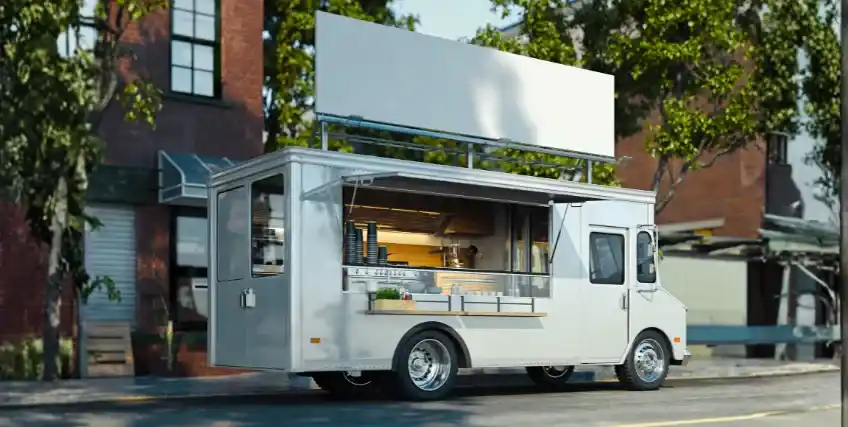
The mobile food industry has been growing for years, and Fortune Business Insights projects that it will continue...
FAQs About Food Industry Financing
1. How does food manufacturing equipment finance differ from a standard food business loan?
Food manufacturing equipment finance is typically asset-backed; the machinery itself acts as collateral, making the loan less risky for the lender. A standard food business loan (like a Term Loan) is generally used for working capital and relies more heavily on the business's overall revenue and credit history for approval.
2. Can borrowers get food trailer financing if it is a startup with no history in the food industry?
Food trailer financing is possible for startups, but lenders will likely require a strong personal credit score and a detailed business plan, demonstrating the trailer's projected revenue. A higher down payment may also be required.
3. What are the common terms and rates for a food business loan in the U.S.?
Rates and terms vary significantly by product. SBA 7(a) loans for real estate or major construction, for instance, may offer competitive repayment terms stretching up to 25 years. However, fast, short-term options like a Merchant Cash Advance typically have terms under 18 months and are repaid through a percentage of daily or weekly sales.
4. Is leasing or financing better for new food manufacturing equipment finance?
The best-suited option depends on each individual circumstance. Commonly, leasing may be better if the goal is flexibility and there are anticipated technology upgrades. Financing (buying) may be preferred, if the goal is ownership, the equipment has a long useful life, and tax deductions like the Section 179 deduction are to be used.
5. What unique challenges does food industry financing present?
The food industry financing sector faces challenges like high failure rates for new restaurants, seasonal cash flow issues, and the high cost of specialized food manufacturing equipment. Lenders mitigate this by requiring strong collateral or charging higher rates for unsecured working capital.
Frequent searches leading to this page

Term Loans are made by Itria Ventures LLC or Cross River Bank, Member FDIC. This is not a deposit product. California residents: Itria Ventures LLC is licensed by the Department of Financial Protection and Innovation. Loans are made or arranged pursuant to California Financing Law License # 60DBO-35839