Tips to Secure Funding for Your New Renewable Energy Business
June 05, 2026 | Last Updated on: June 05, 2026

Looking for Business Financing?
Apply now for flexible business financing. Biz2Credit offers term loans, revenue-based financing, lines of credit, and commercial real estate loans to qualified businesses.
Set up a Biz2Credit account and apply for business financing.
Finding the right funding for renewable energy projects in your business can be a daunting venture. But many businesses have successful stories to tell after partnering with the right institution.
Whether it is to battle rising electricity costs, become more responsible in managing emissions output, or listen to the growing concerns of environmentally and socially aware consumers, many businesses are now investigating the potential of renewable energy to generate power.
Challenges in Green Energy Funding
Raising capital for a renewable energy business may come with unique challenges. There is strong governmental support, but it comes with its own set of issues:
Regulatory and Policy Fluctuation
High Upfront Capital Cost
Long Payback Periods
Outdated Infrastructure
Fossil Fuel Lobbying
Sometimes, tax credit eligibility for renewable energy businesses changes frequently, such as the Inflation Reduction Act (IRA) phase-outs or new domestic requirements. This can shift project costs overnight. Investors are often wary of "policy risk."
Green energy projects, such as power plants and renewable technologies, need a lot of money at the start. They require significant initial investment for infrastructure (panels, turbines, construction) compared to low ongoing operating expenses
Many providers in the renewable energy business prefer quick returns. However, green energy business solutions often have longer horizons. It can take years for a project to move from the permitting phase to full operational status.
Many existing power grids were built for a more centralized and predictable energy system. Consequently, they struggle to accommodate the fluctuating output and distributed nature of modern renewable energy sources.
Ongoing influence from established fossil fuel industries can slow or obstruct efforts to advance and adopt policies that support renewable energy.
These challenges highlight why securing funding for renewable energy ventures demands more resilience and strategic planning. By understanding the financial, regulatory, and infrastructural barriers upfront, you can better position your projects to attract investors.
How to Overcome Renewable Financing Challenges
Startups and young technology companies always need more capital. At the beginning, they often start with personal savings or funding from friends and family. Access to government grants can help a company grow faster. Depending on the rules associated with grants, they can allow business founders to build prototypes, recruit staff, access test equipment, undertake market research, attend conferences, and buy business services.
Most start-up founders prefer not to sell equity (through dilutive funding) for their renewable energy business if possible, as it can reduce future earning potential. While governments typically do not claim ownership shares, it is common for incubators to take equity in exchange for providing capital or services, given the risks involved.
As a renewable energy business grows, it requires more capital to pay for office space, build prototypes, secure procurement contracts and obtain many other necessities, including eventual production capacity. During a company’s later stages of development, the sources of financing are more varied, and government support is more likely to be paired with private capital.
In some countries, public grants for renewable energy business are available for limited tasks, such as exploring overseas markets or buying equipment. It is rare for governments to provide concessional debt to energy start-ups, but it is not unprecedented.
Government programs also differ in how recipients apply for funding and how funders evaluate them, with prize-based initiatives sometimes resulting in large grants several years after application and other funds being disbursed within weeks or months, in line with the capital needs of a small and growing firm.
Popular Funding Sources for Renewable Energy Business
Government grants are one of the most common sources of capital for clean energy technology and renewable energy businesses. However, several other funding options are also available for green ventures. The following subsections introduce the various types of government financial support for start-ups, with examples from the case studies and other relevant sources, starting with non-dilutive public grants awarded through calls and prizes, and moving on to dilutive angel and seed equity investments. Each section distinguishes between financing provided directly by governments and indirectly through intermediaries such as incubators and venture capital funds. Here are some of the most common and useful options:
Green Bank Loans
How they work: They leverage public funds to stimulate private investment.
Venture Capital (VC) Partnerships
Green banks are organizations with a clear mission to address these financing gaps in the market. In the US, groups such as the NY Green Bank and other state agencies offer financing for projects that regular banks may consider too risky.
Venture capital has evolved. There is now a class of "Climate VCs" that understand climate change and the requirements of the energy transition. In early 2026, climate-focused funds have prioritized AI-driven energy management and long-duration energy storage.
Patient Capital: These venture capitalists are now ready to provide "patient capital," meaning they are willing to wait longer for a return if the technology is truly disruptive.
This initiative in the global energy sector helps renewable energy businesses secure expert advice and the capital they need.
Key Requirements to Secure Funding for a Renewable Energy Business
Investors and lenders now depend heavily on data. To get funding, you must show that your renewable energy business is financially sound and has a positive impact on the environment. However, these requirements may vary for each funding option.
Essential Documentation
To raise money for your renewable energy business, you need to keep a complete digital "Data Room" for investors to review. This organized folder should include:
Power Purchase Agreement (PPA): This is a long-term contract with a buyer, like a utility or large company, to buy the electricity you produce. It gives you a steady income, which lenders need to see that you can pay back loans.
Site Control: You must provide definitive proof of ownership or long-term lease agreements for the project location. Investors need to be certain that your renewable energy business has the legal right to occupy the land for the duration of the project's life.
Detailed Business Plan: This is your roadmap for growth and how you plan to handle market changes in 2026. It should cover your financial forecasts, competition, and your plan to reach customers.
Technical Validation: To get major funding, you need to prove your idea works. This can be through patents, prototypes, or outside engineering certificates. These show your technology is efficient, reliable, and ready for the market.
Grid Interconection Agreements: This confirms you have a signed agreement with the local utility to connect your project to a new energy source. Without a clear path to the grid, a project cannot generate revenue, making this a "make-or-break" document for business energy renewal financing.
Permitting and Environmental Compliance: You need to include all required permits and Environmental Impact Studies. In 2026, showing that your project causes little harm to the environment is required for solar grants or green loans.
Sustainability Metrics for Renewable Energy Business
Today’s investors care about more about the environment than profits. They use tools like the Sustainability Accounting Standards Board (SASB) to evaluate your project. Be ready to report on:
Carbon Avoidance: Sustainability metrics for renewable energy businesses often focus on avoided emissions. This metric quantifies the total volume of greenhouse gases prevented by delivering clean energy to the grid instead of relying on traditional fossil fuel-based sources.
Resource Circularity: Your plan for managing equipment over its life, such as recycling solar panel grant business after 25 years.
Key Tips to Help You Secure a Loan for Renewable Energy Business
Securing a loan for your renewable energy business requires a different pitch than seeking equity. Lenders want to see stability and guaranteed cash flow.
Secure a Power Purchase Agreement (PPA) before you apply for a loan. If a well-known company or utility agrees to buy your energy for 15 years, banks will see you as a much safer investment.
Keep a good balance between debt and equity. Lenders want to know you are committed to the business, so try to cover at least some of the amount with your own funds or equity.
Leverage Bonus Depreciation: You can mention the tax benefits to lenders. Under US law, commercial solar and battery systems may qualify for 100% first-year depreciation. Highlight how significantly it improves your cash flow and makes debt servicing easier.
Governments make most financing available using “call windows” to solicit applications during a fixed time frame, and then select from among them through internal and external expert evaluations.
Energy Project Financing Articles
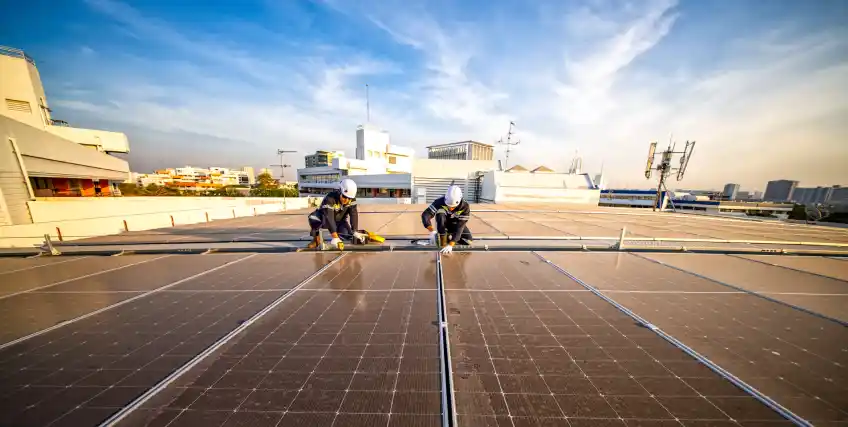
Renewable Energy Project Financing: Your Guide to Sustainable Business Growth

Popular Financing Options for Your Next Commercial Energy Project
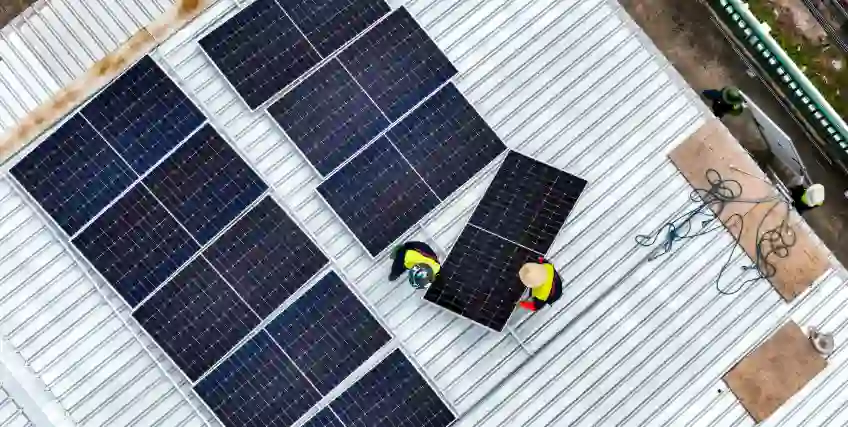
Financing Renewable Energy Projects: Loans vs. Grants
FAQs about Renewable Energy Business
1. What are the types of renewable energy projects to invest in?
Seven primary sources of renewable energy include solar, wind, hydroelectric, geothermal, biomass, ocean, and hydrogen. By using naturally replenishing resources, you may generate minimal greenhouse gas emissions. This makes them vital for shrinking carbon footprints while providing clean power for residential, commercial, and transportation sectors.
2. How can I fund my solar energy plant?
Some of the best ways to arrange capital for your solar installation and energy infrastructure are government grants, subsidies, project finance and debt, venture capital, corporate PPAs, green bonds/ loans, and specialized lending (MSMEs).
3. How to fund a renewable energy business?
There are multiple ways, like government funds, green banks, venture capital etc. available through which you can fund your renewable energy project. These funding options are available, considering some other factors like the prospective use of energy resources, possible benefits, etc.
4. How to start a renewable energy startup?
To establish your renewable energy business, you can begin by identifying a specific niche such as R&D, manufacturing, sales, or installation. Develop a foundational understanding of electricity generation systems and consider providing services through long-term contracts. You can also earn professional certifications from recognized organizations to build credibility.
5. Is the renewable energy business profitable?
The clean energy business can be highly profitable in the USA due to rising demand, government subsidies, and low operating costs.
