Renewable Energy Funding for Small Businesses: 5 Loans to Consider
February 10, 2026 | Last Updated on: February 10, 2026

By Anjali Patel
Looking for Business Financing?
Apply now for flexible business financing. Biz2Credit offers term loans, revenue-based financing, lines of credit, and commercial real estate loans to qualified businesses.
Set up a Biz2Credit account and apply for business financing.
Key Takeaways
Renewable energy funding helps small businesses in the U.S. manage energy costs and long-term stability.
- Adapting to clean energy investments support energy efficiency and lower emissions over time.
- The Department of Energy Initiatives offer various funding opportunities through loan programs and technical assistance.
- There are various types of renewable energy financing options available for businesses including green loans, term loans, and energy financing to support renewable energy projects., and energy financing to support renewable energy projects.
- The Federal government supports businesses under the Inflation Reduction Act and help strengthen clean energy projects.
Renewable energy grants and tax credit programs reduce upfront costs for solar energy and energy storage systems.
Today, energy expenses continue to shape business decisions across the United States. Businesses now deal with rising utility costs, aging energy infrastructure, and climate change concerns that affect daily business operations. Hence, small businesses often feel this pressure more than larger enterprises due to shortage of cash flow.
Renewable energy represents a practical solution to all these rising challenges. They include solar energy, advanced energy systems, and necessary energy efficiency upgrades that reduce dependence on fossil fuels. However, the challenge in adapting all these changes comes from funds.
Renewable energy funding options help businesses bridge this gap. Businesses can now utilize federal funding, private sector participation, and essential energy financing programs to invest in energy projects without harming cash flow. This article explains the most practical financing options and support programs available today for businesses who are looking to undergo energy transition.
What Is Renewable Energy Funding for Small Businesses
Renewable energy funding refers to business financing options that help small businesses adopt clean energy technologies. This financial support renewable energy projects that reduce long-term energy costs and emissions for businesses.
The eligible energy projects for energy financing include:
- Energy storage solutions for backup power.
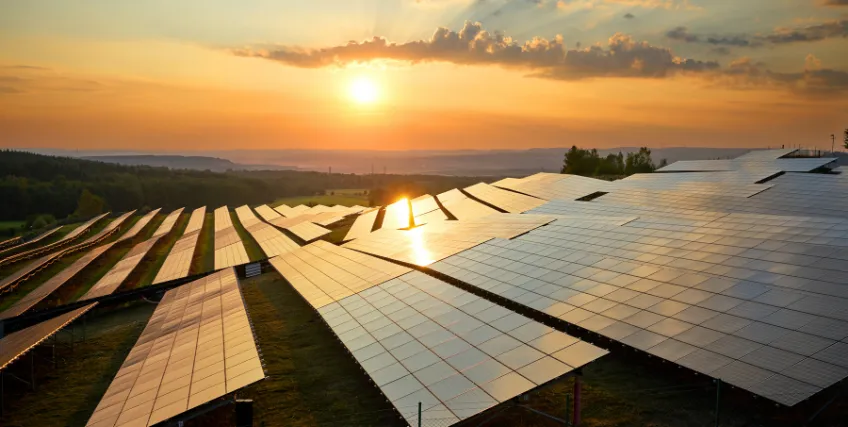
- Solar energy systems for offices and warehouses.
- High-efficiency HVAC and lighting upgrades.
- Modern energy infrastructure improvements.
Therefore, the U.S. Department of Energy (DOE) support all these efforts through various energy programs and research and development initiatives. Also, many funding opportunities align repayment with energy savings and improving affordability.
In short, for small businesses renewable energy funding transforms sustainable energy into a manageable investment.
Why Businesses Are Turning Toward Renewable Energy Funding
In today's time, energy transition goals are continuing to gain momentum across different industries. As a result, local governments, federal agencies, and private sector stakeholders are supporting cleaner energy systems.
Here are some of the reasons why several businesses are shifting toward sustainable energy projects:
- The operating costs for a small business remain unpredictable. Hence, renewable energy stabilizes expenses and improves long-term planning.
Sustainability also influences customer trust. This is also highlighted in the Environmental Protection Agency, stating strong links between clean energy and public conference.
The federal government incentives also expand access to businesses. Hence, programs under the Inflation Reduction Act and Jobs Act increase funding opportunities for small businesses.
- Lastly, supply chains increasingly favor low-emission partners. Therefore, clean energy projects strengthen competitiveness across the ecosystem.
Factors to Consider Before Choosing Renewable Energy Funding Options
Business owners in the U.S. need to evaluate different parameters when seeking renewable energy funding. It is important for them because these factors shape the right funding decision and help their business grow at a scalable rate.
Business owners may consider the following factors:
Project scale: Businesses that require large-scale installations might need longer repayment periods.
Energy technologies involved: Businesses need to assess the purpose of energy financing. Because solar energy and energy storage often differ in cost structures.
Borrower eligibility: Business owners need to show a good credit history along with consistent business revenue to qualify for business financing.
Cash flow impact: Before considering renewable energy financing, businesses need to ensure that their monthly payments align with their cash flow.
Federal funding compatibility: There are some types of business loans that also work alongside tax credit programs.
5 Funding Options for Renewable Energy Businesses
Here are some of the most popular funding options that can be used by renewable energy small businesses for various renewable energy projects.
SBA Loans
- Commercial solar installations
- Large-scale energy system upgrades
- Energy efficient improvements
Term Loans
- Mid-sized clean energy projects
- Combined facility and energy upgrades
Green Loans
- Renewable energy systems
- Energy-efficient equipment
- New technologies that support energy transition
Equipment Financing
- Installing solar panels
- Upgrading energy storage units
- Financing advanced energy technologies
PACE Financing
SBA loans are backed by the U.S. Small Business Administration. These loan programs are highly popular among small business owners. SBA loans come with lower interest rates and longer repayment terms for qualified applicants. However, to qualify for these loans, business owners need a strong credit score along with necessary documentation.
SBA 504 loan programs can be used for:
Term loans are traditional business financing options that offer a lump sum loan amount upfront. Business owners can use these loans as they come up with predictable monthly payments and fixed or variable interest rates. Hence, this helps them plan each fiscal year.
Term loans can be used for:
Green loans are funding solutions that focus specifically on clean energy projects and sustainability goals. They encourage decarbonization and reduced emissions.
Business owners can use green loans for:
Equipment financing is a business funding option that allows business owners to purchase assets such as tools, machinery, and technology. Here, business owners can pay in easy monthly payments instead of paying upfront. Also, the equipment itself serves as collateral, reducing risk for lenders.
For renewable energy project, equipment loans can be used for:
PACE financing stands for Property Assessed Clean Energy. This business financing option allows repayment through property tax assessments. Hence, this structure supports long-term clean energy projects.
PACE financing can be used as a renewable energy funding option for:
- Large-scale energy infrastructure upgrades
- Sustainable energy improvements on owned buildings
Government Grants and Incentives for Renewable Energy Projects
For business owners seeking renewable energy funding, grants also play a major role in reducing project costs. There are various government grants for solar power and other energy projects available that businesses can access along with business loans.
Some of the important grant and incentives that business owners can consider include:
Department of Energy Initiatives: It offers various funding opportunities for clean energy projects.
USDA (United States Department of Agriculture): This department offers support for rural businesses and energy systems.
EPA (U.S. Environment Protection Agency): The agency offers multiple programs that target emissions reduction.
Therefore, business owners can apply for any of these grants to seek renewable energy funding that doesn't need to be repaid. Moreover, the Inflation Reduction Act (IRA) helps expand tax credit availability for solar energy, electric vehicles, and energy storage. Also, many commercial solar financing companies help small businesses combine grants with energy financing.
How to Choose the Right Energy Renewable Funding Option
Business owners can choose from a wide range of business financing options available, depending on their energy needs. They need to carefully evaluate all the factors so that their funding decisions reflect operational goals and long-term strategy.
For instance, businesses that require smaller upgrades can align well with equipment financing or green loans. While businesses working on larger renewable energy projects can benefit from SBA or PACE financing options.
Though, undergoing strong planning supports sustainable growth and energy improvements, seeking professional guidance supports smarter decision making. Hence, technical assistance from the Office of Energy Efficiency can help businesses improve project outcomes.
Mistakes to Avoid When Choosing Renewable Energy Loans
Considering business funding does look exciting. However, mistakes do arise while making rushed decisions. Hence, it's better to carefully evaluate all possible mistakes when applying for energy business loans.
These mistakes include:
Underestimating project costs: Never underestimate the cost of a project. Because expenses like installation and maintenance may add up later.
Overlooking federal funding: It is important to check out IRA and other federal programs to reduce expenses.
Ignoring energy savings timelines: Business owners should pay attention to the energy savings timelines so that returns develop gradually.
Skipping lender comparisons: Always compare energy financing terms from different lenders as all loan terms vary widely.
Moving Ahead
Renewable energy funding options empower small businesses in America to invest confidently in clean energy projects. Small business owners can efficiently seek different types of business financing options that support lower emissions, improve sustainability, and offer long-term benefits with predictable costs.
Moreover, small businesses can get support from the U.S. Department of Energy, EPA, and federal government to access various funding opportunities. Additionally, business loans, grant programs, and tax credit programs reduce barriers to entry.
Hence, start evaluating all your energy projects today, consult a financial advisor for different renewable energy funding options, and move toward a cleaner, more stable future.
Green Energy Financing Articles
How Commercial Solar Financing Companies Help Businesses Beat Rising Utility Costs

Sustainable Logistics: Using a Green Energy Grant to Finance Fleet EV Upgrades

How Green Finance Can Help Your Business Qualify for Better Loan Opportunities
FAQs About Renewable Energy Funding Options
1. What types of renewable energy projects can small businesses fund?
Renewable energy funding supports a wide range of projects. Common examples include solar energy installations, energy storage systems, and energy efficiency upgrades. Many businesses also use funding for modern energy infrastructure improvements.
2. How does renewable energy funding help improve cash flow?
Renewable energy funding spreads project costs over time. Monthly payments often align with energy savings from clean energy systems. This structure supports steadier cash flow and predictable expenses.
3. Are SBA loan programs suitable for clean energy projects?
SBA loan programs work well for large-scale renewable energy projects. These loans support long-term investments tied to owned properties. Many businesses use them for commercial solar and energy systems upgrades.
4. What role does the U.S. Department of Energy play in renewable energy funding?
The U.S. Department of Energy supports clean energy through initiatives, loan programs, and technical assistance. The department also promotes research and development for new energy technologies. Many funding opportunities connect directly to DOE-backed programs.
5. Can small businesses combine loans with government grants for solar power?
Government grants for solar power often work alongside energy financing options. Renewable energy grants and tax credit programs reduce upfront costs. Many commercial solar financing companies help coordinate these incentives.